 Mold
Mold
The most common signs of hidden mold after a leak are a persistent musty odor, stains that return after painting, bubbling or soft drywall, warped baseboards, allergy-like symptoms that improve when you leave the house, and visible growth on the back of cabinets or around HVAC equipment. Mold needs moisture, and in Central Texas homes that moisture usually comes from a plumbing leak, an AC condensate problem or water damage that was never fully dried.
Mold releases volatile compounds with an earthy, stale odor. If a room smells musty even after cleaning and airing out — especially a closet, bathroom or laundry area — there is often moisture and growth behind a surface.
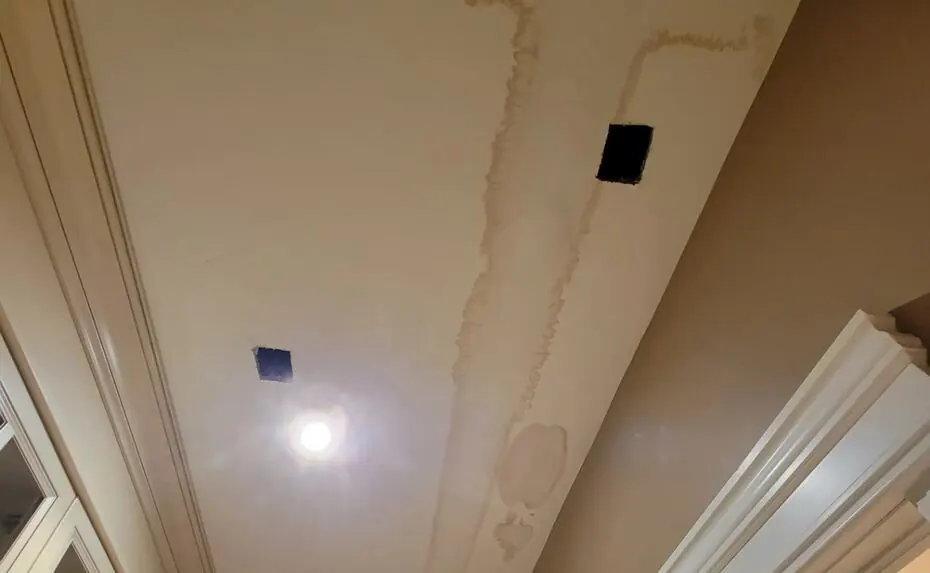
A water stain painted over once and back a few months later tells you moisture is still reaching the surface. The drywall paper and framing behind it are prime spots for growth.
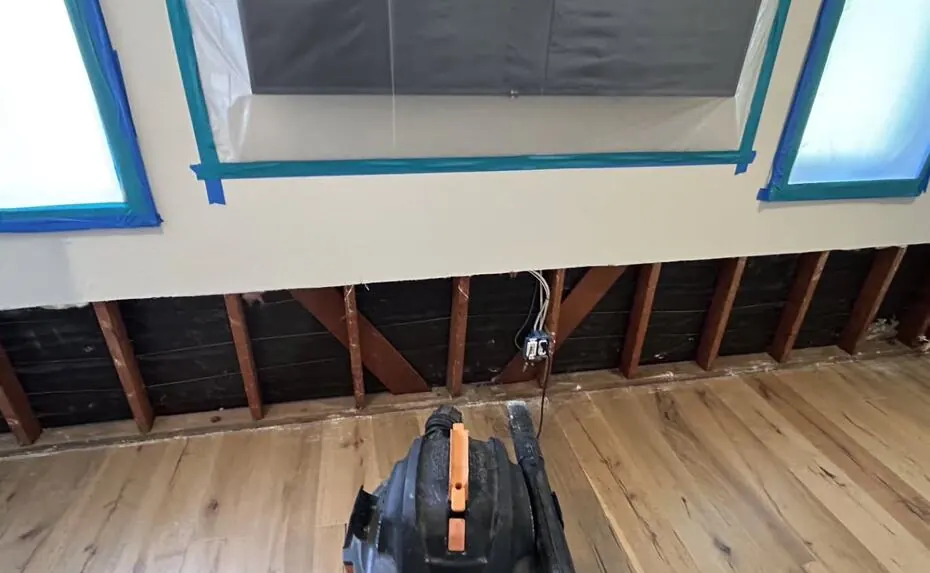
Paint that blisters, drywall that feels spongy or crumbles at the bottom edge, and nail pops in a small area all point to water inside the wall.
Baseboards pulling away from the wall, swollen door jambs and laminate or wood flooring that cups near a bathroom or laundry room are classic signs of a slow leak.
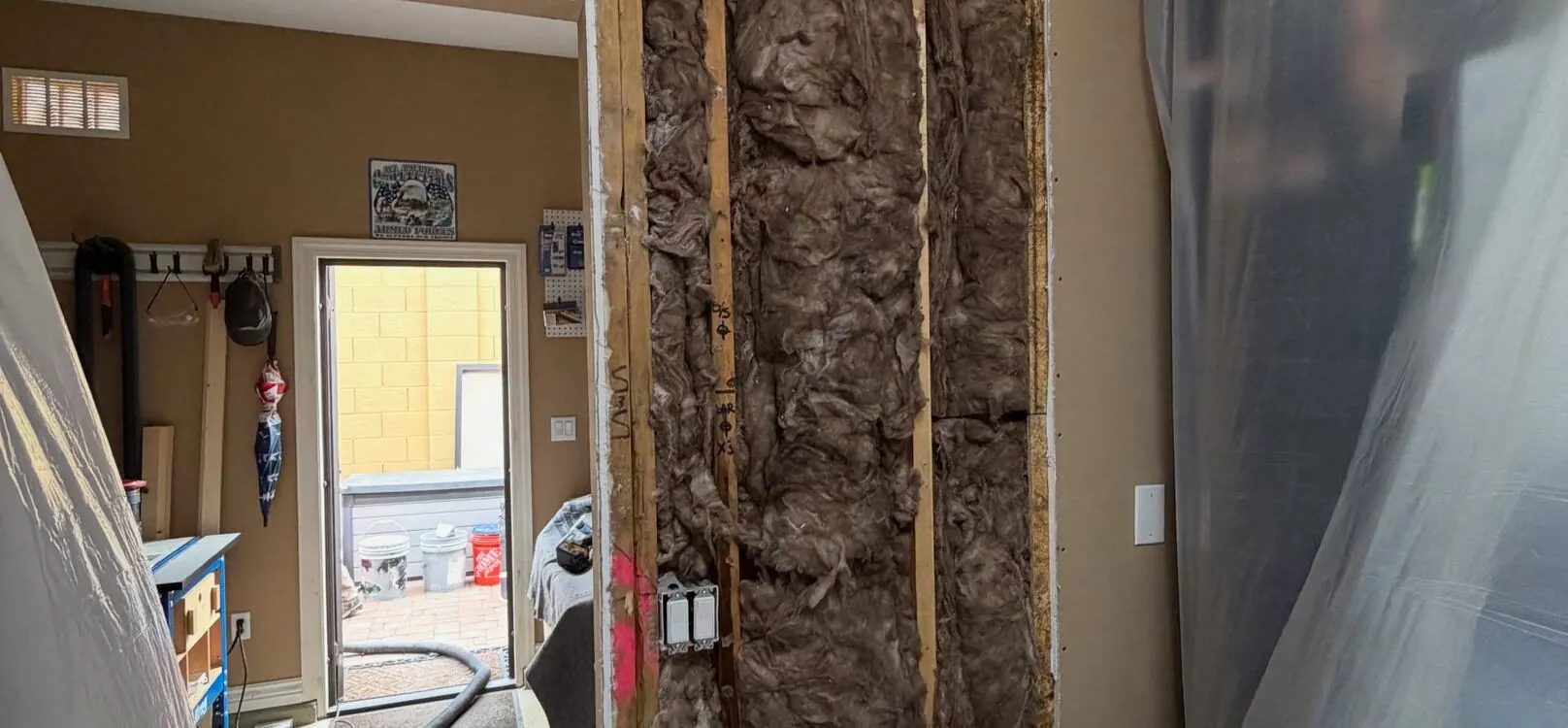
Look at the back and underside of sink cabinets, behind the washer and around the refrigerator’s ice-maker line. Small drips there go unnoticed for months — as in this laundry drain leak we remediated in Pflugerville.
In Austin, attic and closet air handlers produce gallons of condensate a day in summer. A clogged drain line or rusted pan can wet ceilings and insulation below, and the dark, warm space is ideal for mold.
Stuffy nose, itchy eyes or coughing that improves when you leave home can be related to indoor mold. Talk to your doctor about health concerns; we deal with the building.

Mold is never the root problem — moisture is. Remove the growth without fixing the water and it comes right back.
— Evan Mercer, Founder & IICRC Master Water Restorer
If mold is visible, you do not need a test to know it should be removed. Testing is useful when you smell mold but cannot find it, after remediation to confirm the area is clean, or during real estate transactions. In Texas, mold assessment for areas of 25 contiguous square feet or more is performed by a licensed mold assessor, who writes the remediation protocol, and the remediation is done by a separate licensed remediation contractor.
Learn more about our mold remediation service, or call us to schedule an inspection if any of these signs sound familiar.

Evan Mercer founded Crestline Restoration in 2012 and has spent more than 20 years drying, cleaning and rebuilding water-, mold- and fire-damaged buildings in Central Texas. He holds IICRC certifications in water damage restoration and applied structural drying and still visits job sites every week.
A certified technician is on call right now. We stop the water, map the moisture and start drying — and we document everything for your insurance claim.



Locally owned water damage restoration, mold remediation and reconstruction company serving Austin and Central Texas since 2012. IICRC-certified, licensed and insured.

© 2026 Crestline Restoration LLC. All rights reserved.